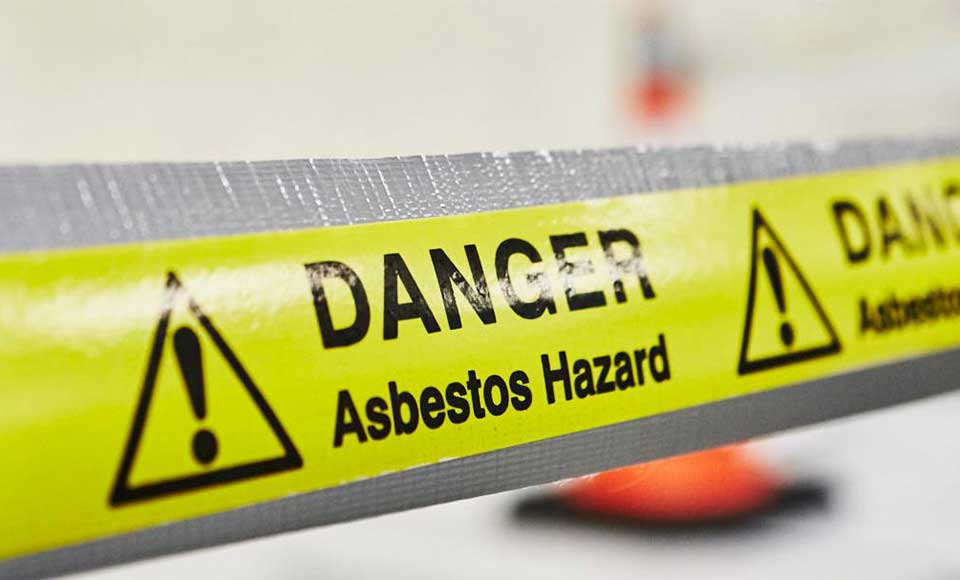
After a huge amount of effort, the Asbestos Network Technical Working Group (ANTWG)’s guidance on leak testing has finally been published. I do mean huge – it’s taken two years of head scratching and negotiation to get something we’re all happy to stand behind.
It took as long as it did for two main reasons. Complex undertakings have a habit of growing arms and legs, and in this case it felt like arms, legs, tentacles and a few fangs too. When you start to talk about leak testing, you also start to talk about smoke testing, as the implications of one bleed into the other.
There was also the fact that the Approved Code of Practice (ACoP) is brutally uncompromising on the subject. Paragraph 416 of the ACoP to the Control of Asbestos Regulations 2012 states: ‘Air monitoring to reduce risks from spread of asbestos is required to measure background fibre levels outside the enclosure… particularly when the enclosure is in occupied premises.’
So, leak testing is both ‘required’ (a very strong word), and not limited to occupied buildings. However, the current situation is that – save for major sites such as nuclear facilities or some well-run NHS trusts – leak tests are rarely conducted at all. In this situation, to follow the ACoP could place licensed asbestos-removal contractors (LARCs) at a commercial disadvantage – there would always be someone prepared to quote without it, relying on a client’s ignorance or indifference to what the guidance actually requires.
Moving the dial from the current position where not many enclosures are leak-tested to the ideal where nearly all are (as the ACoP suggests) was a difficult challenge. One of the key questions was exactly where we should draw the line. In this day and age, with better control measures and better enclosure constructions techniques, should we even target all enclosures for testing?
Our starting point was to try and identify why we as an industry stopped testing, and what the current blockers are that make it so uncommon. Only then could we work backwards to provide guidance that would help LARCs and their clients set the right balance.
Blocker number 1: the clients stopped paying. This is the commercial disadvantage argument. A job is cheaper if you skip controls, or in this case, checks that a control has worked. It’s hard to compete on price if you’re leak-testing per the ACoP.
Blocker number 2: ignorance. The instruction to do leak testing is on paragraph 84 out of 116 in the ACoP. Clients, and unfortunately some LARCs, won’t have read it.
Blocker number 3: a different kind of ignorance. People forget or misunderstand the significance of the word ‘required’ in guidance. This might be compounded by a genuine belief that there’s no chance of a specific enclosure leaking – so why test for it?
The most effective guidance doesn’t state ‘them’s the rules, now get on with it’. It works best when the focus is on why we do things, and how to make sensible decisions about them. We’ve tried to bear that in mind when producing the new leak-testing guidance. It’s relatively short, covering most of the substance in five pages, plus a couple of sheets answering questions from industry. That’s quite an achievement considering that at one point it had grown into a 15-page beast.
More importantly, the new document is focused. Its key messages are there on page one. It tackles the reasons why leak testing has largely disappeared from many projects. It’s also practical, giving us a roadmap that – with the right project and planning – could quite legitimately end with no leak testing at all.
That might sound like an odd outcome for guidance intended to encourage more leak testing, but it is actually one of its strengths. By not requiring needless tests, we’ve increased the chance that people will understand and undertake testing in the majority of cases when it truly is needed.
Let’s take a quick look at some of the key points in the guidance. One of the most important questions comes before we get anywhere near deciding where to put an air-test pump: can we remove the people instead? If asbestos removal can be programmed when a building, or the relevant part of it, is empty, then we have eliminated a significant part of the risk. Weekends, shutdowns, school holidays and similar opportunities therefore form part of the conversation between the LARC, client and principal contractor.
This also means thinking about the people who are easily forgotten. Cleaners, security staff, maintenance teams and deliveries can all put someone back into an area that everyone thought was unoccupied. That’s why this isn’t solely a LARC issue. Under the Construction (Design and Management) Regulations 2015, the client and principal contractor share the duty to coordinate the project so that other people are kept away from the work, and they have far more influence over that than the LARC.
This consideration also gives you something that didn’t exist before to put in front of a client: guidance that says plainly: “leak test, unless you can keep everyone away from the work area”. The conversation is no longer the LARC asking for something extra; the guidance places the onus on the client to ensure people are kept out.
Do that successfully and not only is the project safer, but the need for leak testing may be reduced considerably.
This is where the new guidance becomes particularly useful. Rather than trying to create a rule for every conceivable enclosure it gives us a framework for making the decision.
Having said that, there’s one notable exception. A negative pressure unit (NPU) discharging back into the building should have its discharge leak tested. Beyond that, the guidance asks that we consider the consequences if containment is lost:
That middle question is particularly important. It’s very easy to think about an enclosure as a box, and concentrate on the area immediately outside it. Real buildings aren’t like that. They have service penetrations, ducts, ceiling voids, corridors, ventilation systems, and all sorts of other connections. People move through them too. The assessment needs to look beyond the polythene, and ask where contamination could realistically travel.
There’s also a difference between a leak into an empty plant room, and one that could affect a hospital ward or a critical control room. The guidance calls these ‘sensitive areas’ and makes the point that as well as the immediate exposure risk, the consequence of contamination matters too.
The other half of the assessment is the removal work itself. We all know that fibre levels inside an enclosure can vary enormously. Carefully removing intact material is very different from breaking out asbestos insulation board (AIB), removing lagging, or tackling sprayed coating.
The same nuance applies to the method. If the technique is inherently more aggressive, puts additional strain on the enclosure, or is sufficiently new that we don’t yet have a substantial body of evidence about its performance, that should influence the leak-testing decision.
This is important because of the need to consider the consequences of any failure of the enclosure. A small loss of containment from an enclosure with very low airborne fibre levels is plainly a different proposition from the same failure during high-fibre removal.
This, I think, is where the guidance strikes a useful balance. It doesn’t say that every enclosure must automatically be leak tested. But neither does it allow leak testing simply to disappear because it isn’t something a contractor normally does.
You have to make the decision. If the conclusion is that testing isn’t necessary, the reasoning needs to make its way into the Plan of Work.
That’s potentially quite powerful. Imagine a straightforward project where the building can be completely vacated, the removal technique is well controlled, there are no particularly sensitive areas at risk, and the NPU exhausts safely outside. A properly considered assessment may conclude that leak testing adds little.
That’s a very different scenario from not testing because it wasn’t included in the quote. And this is the area where better planning could give us the slightly counter-intuitive outcome I mentioned earlier: no leak testing, but a safer project.
The same risk-based thinking continues once the decision has been made to test. There’s little value in putting a pump at a convenient point outside the enclosure simply so that a leak-test certificate exists. Instead, think about how this particular enclosure could lose containment.
Perhaps removal work is vibrating a pipe that passes through the enclosure wall. Perhaps opening up the asbestos-containing material exposes a void that connects with another part of the building. Maybe services penetrate the enclosure, or the original smoke test identified an area that was particularly difficult to seal. Those are the places where monitoring becomes useful.
Remember the point isn’t to prove that a pump ran for a few hours. It is to give yourself the best chance of discovering that the controls aren’t performing as intended.
One of the big questions was always going to be whether you need test for leaks if you have negative pressure. Modern air management is significantly better than it was. We can check airflow, look at flap deflection, monitor the NPU, and smoke test an enclosure before removal starts.
All of those are valuable, but they tell us different things. The simplest distinction is that they tell us something about the condition or operation of the enclosure. They don’t actually measure whether asbestos fibres have escaped from it.
The NPU example in the guidance illustrates this rather neatly. A small defect in the HEPA filter could allow fibres through without producing a significant pressure change across the filter. Similarly, an enclosure can remain under negative pressure while the activities taking place during removal create opportunities for contaminated air to escape.
So, negative pressure remains an essential part of containment, but it doesn’t satisfy the same question we’re seeking to answer by leak testing.
The other argument the guidance addresses is that repeated low results prove further testing is unnecessary. I can understand why that argument developed. If you’ve paid for leak testing on job after job and never found anything, eventually someone is going to ask what value it is adding.
But there is a flaw in the logic. Testing is a check that the controls have worked this time.
We don’t stop carrying out other safety-critical checks because job after job were satisfactory. The fact that the results are consistently good may demonstrate that the control system is effective, but it doesn’t demonstrate that today’s enclosure hasn’t been damaged, or that something hasn’t changed.
Where the risk assessment says leak testing is necessary, a history of good results isn’t in itself a reason to stop.
Once testing is required, HSG248 (the analysts’ guide) gives us the framework. First, test early enough to identify a significant problem before it has been allowed to continue for hours. Then use longer sampling to give assurance that containment continues to be effective as the work progresses.
For work continuing over several days, that means monitoring each day rather than treating a single result at the beginning of the project as evidence that everything will remain fine thereafter.
There’s also an important trigger point. A result above 0.010 fibres per millilitre of air (f/ml) isn’t something to put in the file and look at later. Work stops and you investigate. That investigation isn’t just about looking for a hole in the polythene. You need to understand what was happening at the time. Has something changed with the enclosure or NPU? Has the removal method changed? Have people or waste just passed through the airlock? Is there another source of airborne fibres that could explain the result?
Find the problem, put it right, and demonstrate that the controls are working before carrying on.
After two years of discussion, I think we have ended up somewhere quite sensible. Leak testing shouldn’t be an automatic tick-box exercise, but nor should it be something that has quietly fallen out of the asbestos removal process.
Instead, start with the project, and ask basic questions: can we keep other people away from the work? What are we removing and how are we removing it? If containment did fail, where could the fibres go and who or what could be affected?
The answers tell us whether leak testing is needed. If the answer is no, explain why in the Plan of Work. If the answer is yes, don’t just test because the guidance tells you to. Think about where a failure could occur, and design the monitoring so that it actually has a chance of finding it.
For me, that’s the real value of the new guidance. The commercial incentive now lies with keeping other trades, the general public and anyone else away from your enclosure, which every LARC will see as a huge win. It also moves us away from both ‘we don’t leak test’ and ‘we leak test because we have to’.
Now we should be able to say: we thought about the risk, planned the job properly, and can explain exactly why we did or didn’t test.
To read the guidance directly, go to the CONIAC website, or click here to view Appendix 01/26.
If you use third-party software to record site paperwork, now’s the time to ask the developer whether they’ll be ready to support you with this new guidance. It’ll come as no surprise that Assure360 already is. If you want to understand more about how that works in practice, contact us for a free demonstration.
Tweet Share on Facebook Share on Linkedin